Key takeaways
- Xylitol is a sugar alcohol (polyol), food additive E 967, with roughly the sweetness of table sugar and about 40% fewer calories (2.4 kcal per gram in EU labelling, against 4 for sugar).
- It occurs in small amounts in fruit and vegetables. Commercial xylitol is made from xylan, a plant fibre found in birch and other hardwoods and in corn cobs.
- Mouth bacteria cannot ferment xylitol into acid the way they ferment sugar. Meta-analyses link xylitol gum with less dental plaque and lower levels of Streptococcus mutans.
- EU law allows one xylitol-specific claim: chewing gum sweetened with 100% xylitol has been shown to reduce dental plaque, with 2 to 3 g of gum at least 3 times a day after meals.
- Xylitol raises blood glucose far less than sugar, but large amounts can cause bloating or loose stools. A 2024 study on xylitol and platelet activity calls for more research on high intakes.
- Xylitol is highly toxic to dogs, even in small amounts. Keep all xylitol products away from pets.
Xylitol has gone from a niche Finnish discovery to one of the most studied sweeteners in dentistry. It sits in chewing gum, mints, toothpaste and sugar-free sweets, and it shows up on ingredient lists more often every year. Yet most people who buy it could not say what it actually is, where it comes from or what the evidence really shows.
This guide answers those questions in one place. It covers the chemistry, the sources, how xylitol behaves in the mouth, what clinical research has found (including where the evidence is weak), what European law lets brands claim, and the safety points worth knowing, from digestive tolerance to the danger it poses to dogs. Every key statement links to its source.
What is xylitol?
Xylitol is a sugar alcohol, also called a polyol. Chemically it is a five-carbon molecule with five hydroxyl groups (formula C5H12O5). Despite the name, it contains no ethanol: “sugar alcohol” simply describes its structure, which looks partly like a sugar and partly like an alcohol.
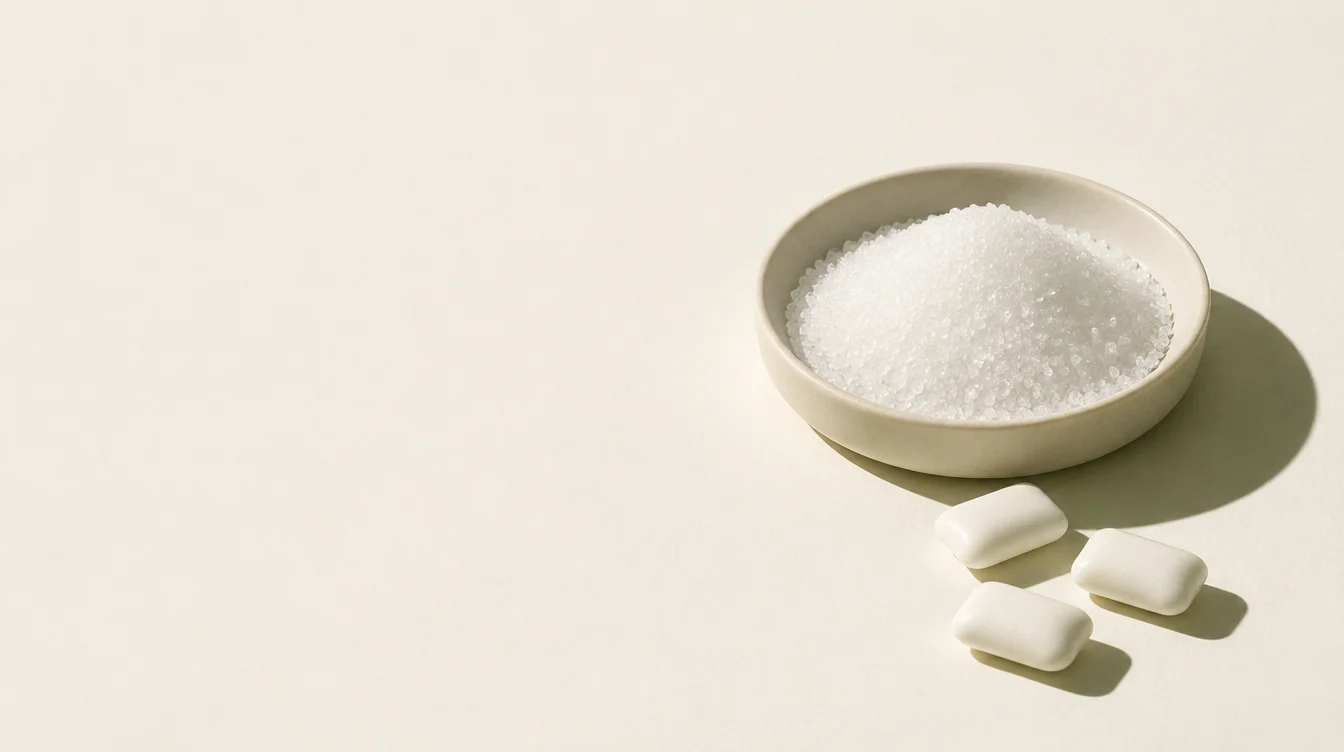
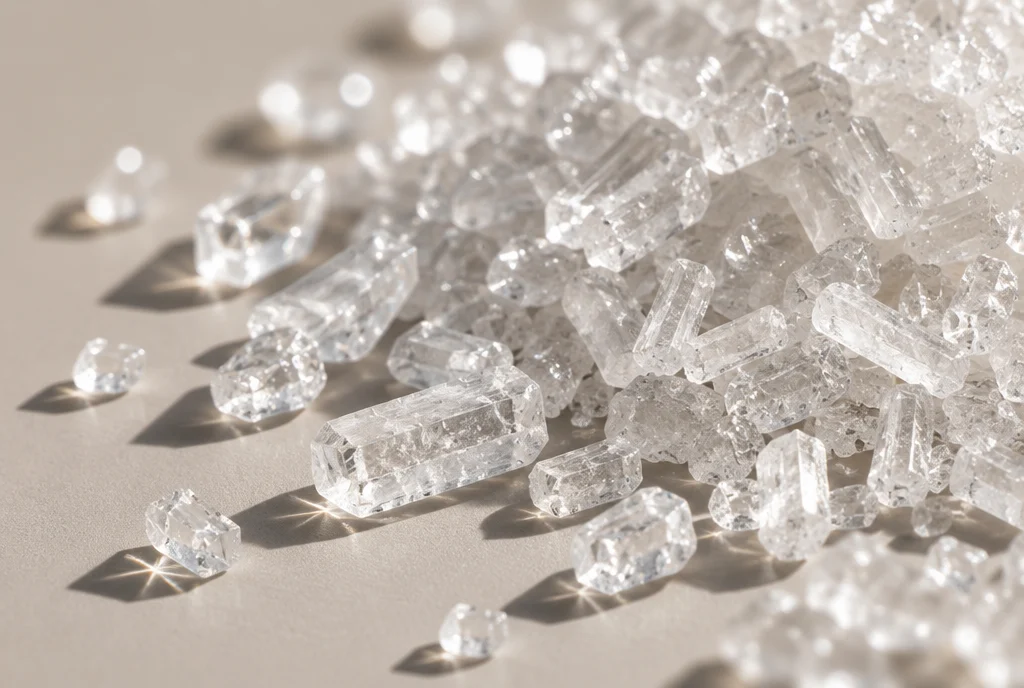
In practical terms, xylitol is a white crystalline powder that looks and tastes very much like table sugar. Gram for gram it is about as sweet as sucrose, so it can replace sugar one to one in many recipes, and it leaves a slight cooling sensation on the tongue as it dissolves. In the European Union it is an authorised food additive with the code E 967, used as a sweetener and as a humectant (an ingredient that helps food keep its moisture).
Two properties make xylitol different from sugar. First, the body absorbs it only partly and slowly, so it supplies fewer calories: EU nutrition labelling uses 2.4 kcal per gram for polyols, compared with 4 kcal per gram for sugar. Second, the bacteria in dental plaque cannot ferment it into acid. Almost everything that makes xylitol interesting for oral health follows from that second point.
Xylitol at a glance
| Property | Xylitol | Table sugar (sucrose) |
|---|---|---|
| Type | Sugar alcohol (polyol), 5 carbons | Disaccharide, 12 carbons |
| Sweetness | About the same as sugar | Reference (1.0) |
| Energy (EU labelling) | 2.4 kcal/g | 4 kcal/g |
| Glycaemic index | Commonly cited as about 7 | About 65 |
| Fermented into acid by plaque bacteria | No | Yes |
| EU food additive code | E 967 | Not an additive |
What does E967 mean on a food label?
E967 is the EU code for xylitol. Every food additive authorised in the EU receives an E number after a safety assessment, and xylitol is on the Union list of permitted additives in Regulation (EC) No 1333/2008, where it is used as a sweetener and humectant. A label may show either the code or the name, for example “sweetener: xylitol” or “sweetener: E967”. Both mean the same thing. Neither tells you how much xylitol the product contains.
Xylitol belongs to the polyol group of sweeteners, together with sorbitol (E420), mannitol (E421), isomalt (E953), maltitol (E965), lactitol (E966) and erythritol (E968). Because of their laxative potential, EU rules generally do not allow polyols in beverages, and the Commission has noted that in solid foods they are unlikely to cause undesirable laxative symptoms below about 20 g a day from all sources (Regulation (EU) 2021/1175). Foods with more than 10% added polyols must also state that excessive consumption may produce laxative effects (Regulation (EU) No 1169/2011). If you see several polyol E numbers on one label, their effects on digestion add up.
Where does xylitol come from?
Xylitol occurs naturally, in very low quantities, in fruit and vegetables such as plums, strawberries, cauliflower and pumpkin, according to a review in Critical Reviews in Food Science and Nutrition (Ur-Rehman et al., 2015). The amounts are far too small to extract, so every gram of commercial xylitol is made from plant fibre.
The starting material is xylan, a hemicellulose found in hardwoods such as birch and beech and in agricultural by-products such as corn cobs and sugarcane bagasse. The process has three broad steps:
- Hydrolysis. The fibre is broken down, usually with acid, to release xylose, a five-carbon sugar.
- Purification. The xylose solution is cleaned of other sugars and by-products.
- Conversion. Xylose is converted to xylitol, either chemically by hydrogenation or biologically with yeast. The same review notes that biotechnological routes based on agricultural and forestry waste can reduce energy use and cost.
Chemically, xylitol from birch and xylitol from corn cobs are the same molecule. What differs is the supply chain, the price and, for some buyers, the sustainability story. For a consumer, the more useful question is not the source but how much xylitol a product actually contains, which we cover later.
Is birch sugar the same as xylitol?
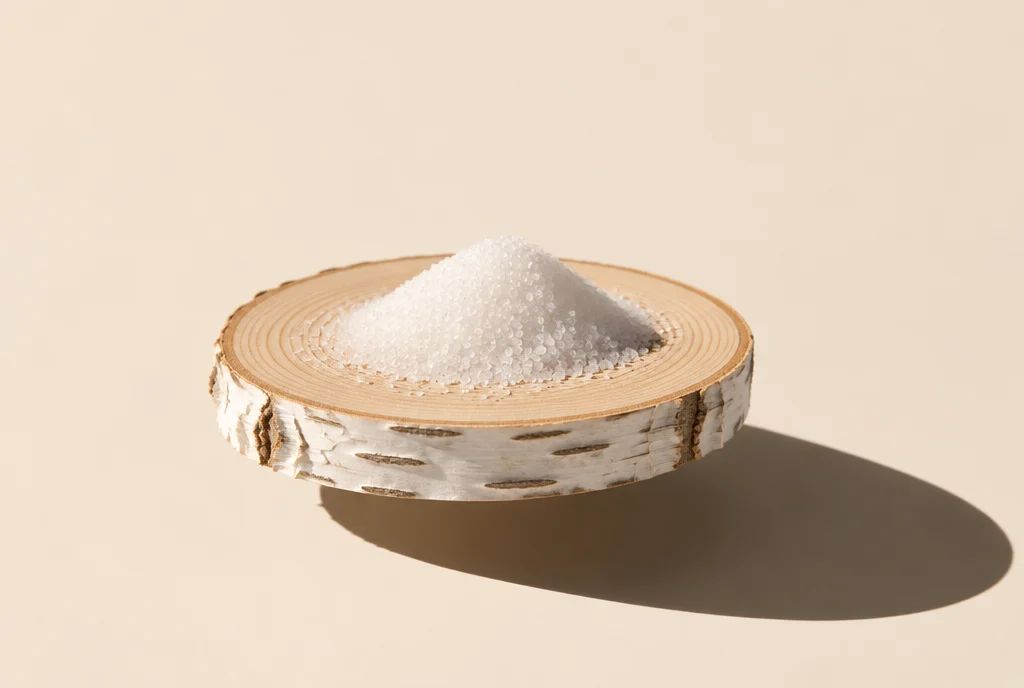
Yes. Birch sugar is another name for xylitol. The name comes from birch wood, the raw material traditionally used to make it, particularly in Finland. Today xylitol is also widely produced from corn cobs and other plant fibre, and the finished molecule is identical whatever the source.
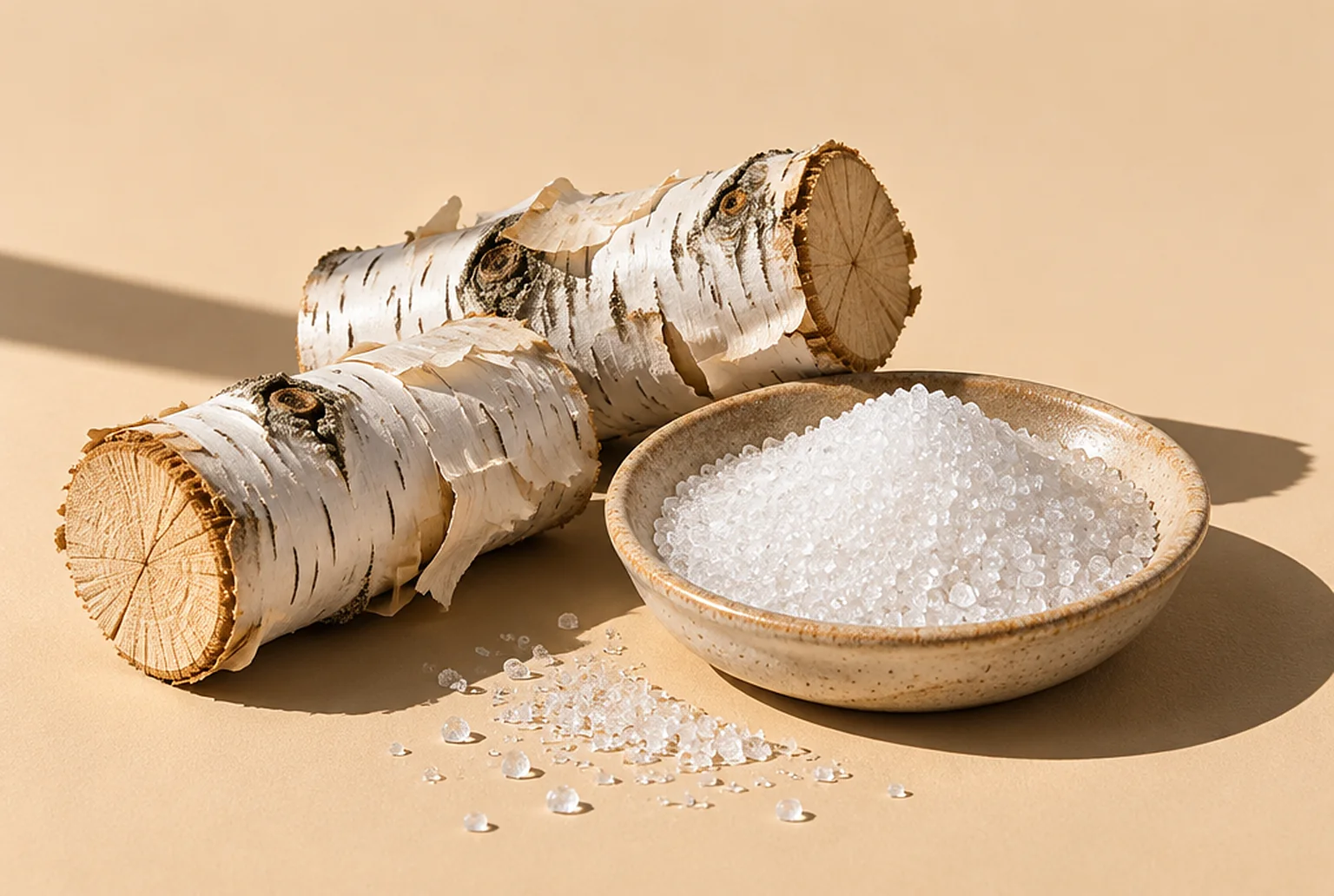
That means birch sugar has the same properties as any other xylitol:
- about the same sweetness as table sugar
- 2.4 kcal per gram under EU labelling rules
- the same effect on plaque bacteria and blood glucose
- the same digestive tolerance limits
- the same danger for dogs. Treat any product listing birch sugar exactly like xylitol. See our guide to xylitol and dogs.
If the origin matters to you, for example for sustainability reasons, look for a stated source on the pack rather than relying on the name alone. For taste, sweetness and health effects, birch and corn xylitol are interchangeable.
A short history: from Finnish labs to dental clinics
Xylitol was first described by chemists in the late nineteenth century, but its modern reputation comes from Finland. In the 1970s, researchers at the University of Turku ran what became known as the Turku sugar studies. In the best-known trial, volunteers replaced almost all the sucrose in their diet with either fructose or xylitol for two years. The average increase in decayed, missing or filled tooth surfaces was 7.2 in the sucrose group, 3.8 in the fructose group and 0.0 in the xylitol group (Scheinin and Mäkinen, 1977).
A second Turku trial compared sugar gum with xylitol gum over one year and found a significantly lower caries incidence with xylitol. The authors linked the effect to two things: oral bacteria cannot use xylitol, and repeated small doses change conditions in plaque and saliva. These small studies would not meet today’s standards on their own, but they set the research agenda for the next fifty years.
How xylitol works in the mouth
To understand xylitol, it helps to understand tooth decay. Dental plaque is a sticky film of bacteria. When you eat sugar or other fermentable carbohydrates, some of these bacteria, especially Streptococcus mutans, ferment them into acid. That acid lowers the pH at the tooth surface and dissolves minerals from the enamel. Saliva then buffers the acid and helps redeposit minerals. Caries develops when the acid attacks win, day after day.
Xylitol interferes with this cycle in three ways described in the research literature:
- No acid from xylitol itself. Plaque bacteria cannot ferment xylitol, so replacing sugar with xylitol removes one source of acid altogether.
- Fewer acid-producing bacteria over time. Studies report that S. mutans takes up xylitol but cannot use it for energy, which wastes the bacterium’s resources. With regular use, trials have measured lower S. mutans levels in plaque and saliva.
- More saliva. Chewing any sugar-free gum stimulates saliva, which neutralises acids and carries calcium and phosphate back to the enamel. This effect comes from chewing, not from xylitol specifically, which is why the EU authorises general claims for all sugar-free gum.
It is important to keep these mechanisms separate. The saliva effect applies to any sugar-free gum, whether it is sweetened with xylitol, sorbitol or maltitol. The plaque and bacteria findings are where xylitol is thought to add something extra, and that is what most of the clinical research tries to measure.
What the research says about xylitol and teeth
Xylitol has been studied in hundreds of trials, but the quality of those trials varies a lot. Here is what the main systematic reviews and meta-analyses report, from the most encouraging findings to the most cautious.
Dental plaque
A 2022 systematic review and meta-analysis in Frontiers in Oral Health pooled eight studies and found that sugar-free gum significantly reduced the amount of plaque compared with no gum or non-sugar-free controls. Looking at xylitol gum specifically, the reduction was also significant, with an effect size of -0.743 (Frontiers in Oral Health, 2022). The authors noted high variation between studies and asked for longer, larger trials.
Streptococcus mutans
A 2021 meta-analysis in BMC Oral Health reviewed thirteen studies of sugar-free gum and oral microorganisms. Twelve of them used xylitol gum, which significantly reduced S. mutans levels compared with controls (effect size -0.46). In seven of the thirteen studies, however, the confidence interval crossed zero, meaning those individual trials could not rule out no effect (BMC Oral Health, 2021).
Dose matters. In a randomised trial at the University of Washington, 132 adults chewed gum delivering 3.44, 6.88 or 10.32 g of xylitol a day, split over four occasions. The two higher doses cut S. mutans in plaque roughly tenfold within five weeks, and the effect held at six months. The lowest dose did not. The authors suggested a plateau between about 6.9 and 10.3 g a day (Milgrom et al., 2006).
Caries (tooth decay)
Plaque and bacteria are intermediate measures. The outcome that matters is decay. A 2019 meta-analysis in JDR Clinical and Translational Research found that chewing sugar-free gum reduced caries increment by 28% overall, and by 33% in the eight trials that used xylitol-only gum, compared with not chewing. The authors called the evidence tentative because of high variation and moderate trial quality (JDR Clin Trans Res, 2019).
A 2024 meta-analysis in the Journal of Dentistry focused on children and adolescents aged 6 to 18. Across 15 studies with 6,325 participants, xylitol showed a significant caries-preventive effect in permanent teeth compared with no treatment or placebo, as did sorbitol to a smaller degree. It also found no clinical trials at all on intense sweeteners such as aspartame or saccharin (Journal of Dentistry, 2024).
The cautious view
Not every review is positive, and an honest guide should say so. The 2015 Cochrane review, the most rigorous type of evidence summary, found only low-quality evidence that fluoride toothpaste with added xylitol may prevent more caries in children’s permanent teeth than fluoride toothpaste alone. For other xylitol products, including gum, it judged the evidence too weak to draw firm conclusions (Cochrane, 2015). A 2024 systematic review of nine clinical trials in the Journal of Clinical and Experimental Dentistry likewise concluded that the preventive effect of xylitol could not be confirmed with the available data (J Clin Exp Dent, 2024).
Our reading: the evidence consistently points in a favourable direction for plaque and S. mutans, and several meta-analyses find less decay with xylitol gum. But many trials are small, old or at risk of bias, so xylitol should be seen as a helpful addition to brushing with fluoride toothpaste, not a replacement for it.
Mothers and young children
One of the most cited lines of research comes from Ylivieska, Finland. Mothers with high levels of S. mutans chewed xylitol gum several times a day after their babies were born, while control mothers received fluoride or chlorhexidine varnish. At age two, detectable S. mutans was found in 9.7% of children in the xylitol group, against 28.6% and 48.5% in the two varnish groups, even though the children themselves did not chew gum (Söderling et al., 2000). By age five, dentinal caries in the xylitol group was about 70% lower than in the varnish groups (Isokangas et al., 2000). These are striking results, but they come from one research group in one population and have not been widely replicated.
What EU law allows brands to say
In the European Union, any health claim made for a food, including chewing gum, must be authorised and worded as approved. This protects consumers from exaggerated promises, and it is a useful filter when you read xylitol marketing. Two regulations are relevant:
- Regulation (EC) No 1024/2009 authorises a xylitol-specific claim: “Chewing gum sweetened with 100% xylitol has been shown to reduce dental plaque. High content/level of dental plaque is a risk factor in the development of caries in children.” It may only be used if consumers are told that the effect is obtained with 2 to 3 g of such gum at least 3 times a day after meals (EUR-Lex).
- Regulation (EU) No 432/2012 authorises general claims for sugar-free chewing gum, regardless of sweetener: it contributes to the maintenance of tooth mineralisation and to the neutralisation of plaque acids, with the effect obtained by chewing for at least 20 minutes after eating or drinking. It also allows a claim for foods containing xylitol instead of sugar: they result in a reduced blood glucose rise after consumption compared with sugar-containing foods (EUR-Lex).
Notice what is not on the list. There is no authorised claim that xylitol “prevents cavities by 70%”, “kills bacteria” or “reverses tooth decay”. If a product promises those things, treat it with scepticism. At Purama Labs we use only the authorised wording on our pages, and we state the conditions of use next to the claim.
Xylitol and blood sugar
Because xylitol is absorbed slowly and only partly, it causes a much smaller rise in blood glucose and insulin than sugar. Its glycaemic index is commonly cited at about 7, compared with about 65 for table sugar. A 2021 review in the Journal of Food and Drug Analysis concluded that polyols such as xylitol are suitable sugar substitutes for people managing blood glucose, while noting that higher doses can cause side effects (Msomi et al., 2021).
For people with diabetes, this makes xylitol-sweetened gum a practical way to enjoy something sweet after a meal. The amounts involved are small: a single piece of gum typically contains around 1 g of xylitol. Anyone managing diabetes should still count the carbohydrates in larger xylitol-sweetened foods and follow their clinician’s advice.
Is xylitol safe for people with diabetes?
Xylitol is one of the more suitable sweeteners for people managing blood glucose. International glycaemic index tables list it in the single digits, far below table sugar (Foster-Powell et al., 2002). In a randomised study in lean and obese volunteers, 50 g of xylitol had only a slight effect on blood glucose and insulin, while erythritol had none (Wölnerhanssen et al., 2016). EU law recognises this effect with an authorised claim: consumption of foods containing xylitol instead of sugar results in a reduced blood glucose rise after their consumption compared with sugar-containing foods (Regulation (EU) No 432/2012).
Three caveats are worth keeping in mind:
- It still counts. Xylitol provides 2.4 kcal per gram, and under EU rules polyols are included in the carbohydrate figure on the nutrition label (Regulation (EU) No 1169/2011).
- Read the whole label. A product sweetened with xylitol can still contain flour, starch, fat or other sugars that affect blood glucose.
- Prefer small amounts. People with diabetes often have higher cardiovascular risk, and the 2024 study on blood xylitol levels and platelet activity concerned high intakes (Witkowski et al., 2024). Gum and mints are a different scale from replacing all the sugar in your diet.
A piece of xylitol gum after a meal, with around 1 g of xylitol, is a small and practical choice. For larger amounts, or if you use insulin or glucose-lowering medicines, follow your clinician’s or dietitian’s advice.
Is xylitol keto-friendly?
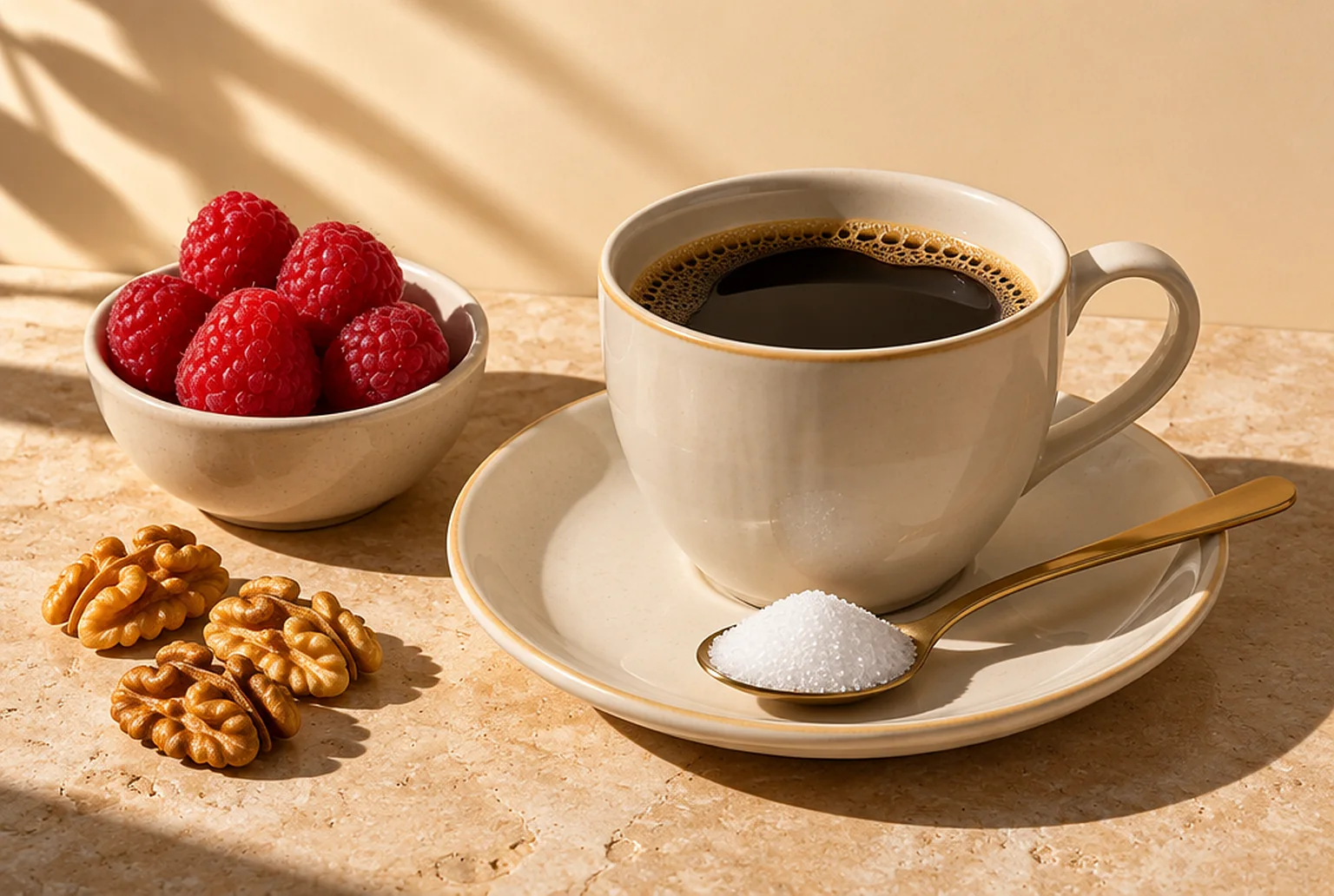
In small amounts, generally yes. Ketogenic diets keep carbohydrate intake very low so that insulin stays low and the body burns fat for fuel. Xylitol is a carbohydrate, but it is absorbed only partly and produces only a small glucose and insulin response (Wölnerhanssen et al., 2016). The xylitol in a piece of gum or a mint is negligible for almost any carbohydrate budget.
Bulk use is a different matter. Baking with xylitol can add tens of grams in a single batch, and there is no agreed standard for how many of those grams to count as net carbs. Some people tolerate this well, others notice an effect on blood glucose or ketone readings. If staying in ketosis matters to you, measure your own response. Erythritol has an even smaller effect on blood glucose and insulin, which is why many keto recipes use it, although xylitol has far more evidence for oral health. Remember too that larger amounts of any polyol can cause digestive discomfort.
Other areas of research
Xylitol has been studied beyond the mouth. The most robust example is middle ear infection in children. A 2016 Cochrane review found moderate-quality evidence that xylitol, given as gum, syrup or lozenges, reduced the risk of acute otitis media in healthy children attending daycare from about 30% to about 22%. It did not help children during a respiratory infection or those prone to repeated ear infections (Cochrane, 2016). The doses in these trials were higher than you would get from occasional gum, and most data came from one Finnish group.
Researchers have also looked at xylitol in nasal sprays, bone health and gut microbiota. These areas are early stage, mostly animal or small human studies, and do not support any practical recommendations yet.
Is xylitol safe? A short overview
For most people, xylitol is not bad for you in the amounts found in chewing gum and mints. It is an authorised EU food additive (E967) with no numerical acceptable daily intake, and it has been used in confectionery and oral care products for decades. Three points deserve attention:
- Digestion. Large amounts can cause wind, bloating and loose stools. Effects usually start at tens of grams a day, or less when xylitol is taken in a drink, while a piece of gum contains around 1 g.
- The 2024 cardiovascular study. High blood xylitol levels were linked with cardiovascular events and higher platelet activity. The amounts involved were far above a piece of gum, and the authors called for more research.
- Dogs. Xylitol is highly toxic to dogs, even in small amounts. If a dog eats any, use our xylitol dog calculator and call a vet straight away.
We cover side effects, how much is too much, pregnancy, children and who should take extra care in a separate guide: Xylitol side effects: is it bad for you and how much is too much?
Xylitol compared with other sweeteners
Xylitol is one of several sugar replacers used in gum and sugar-free products. Here is how the most common ones compare on the points that matter for teeth and everyday use.
| Sweetener | Type | Sweetness vs sugar | Energy (EU labelling) | Evidence for teeth |
|---|---|---|---|---|
| Xylitol (E 967) | Polyol | About equal | 2.4 kcal/g | EU-authorised plaque claim for 100% xylitol gum; meta-analyses on plaque, S. mutans and caries |
| Sorbitol (E 420) | Polyol | About 0.6 | 2.4 kcal/g | Small caries-preventive effect in one 2024 meta-analysis; general sugar-free gum claims apply |
| Erythritol (E 968) | Polyol | About 0.6 to 0.7 | 0 kcal/g | Few clinical trials so far |
| Aspartame (E 951) | Intense sweetener | About 200 times | Negligible in use | No clinical caries trials found in the 2024 meta-analysis |
| Sucralose (E 955) | Intense sweetener | About 600 times | Negligible in use | No clinical caries trials found in the 2024 meta-analysis |
| Sugar (sucrose) | Carbohydrate | Reference | 4 kcal/g | Fermented by plaque bacteria into acid |
Many sugar-free gums combine a small amount of xylitol with sorbitol, maltitol or intense sweeteners. They can still carry the general sugar-free gum claims, but the xylitol-specific plaque claim only applies to gum sweetened with 100% xylitol.
How to use xylitol for your teeth
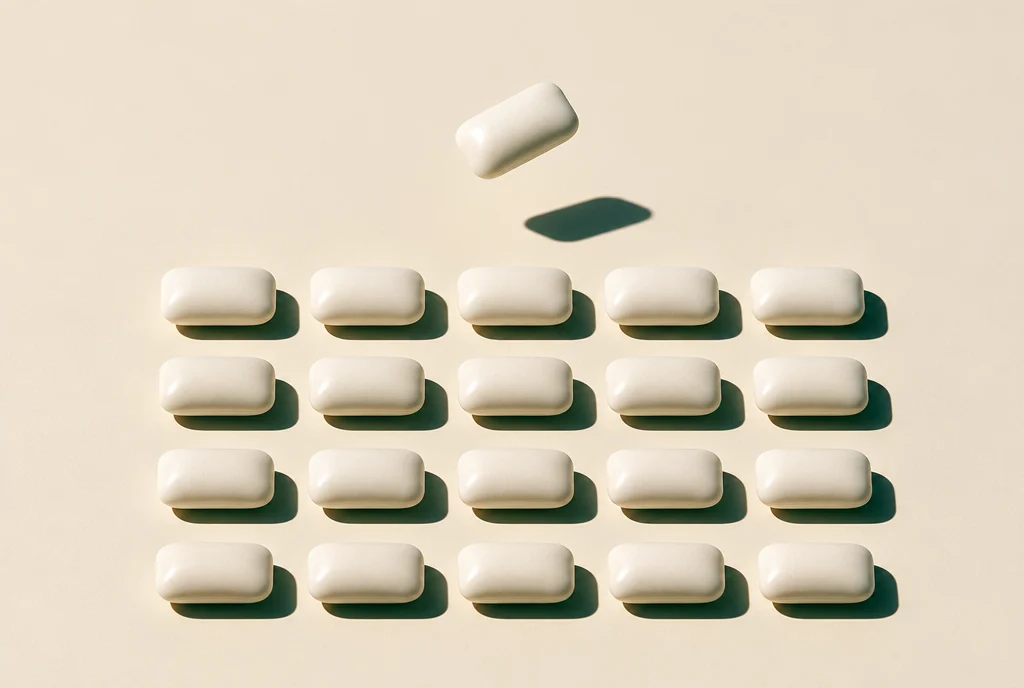
If you want to make xylitol part of your oral care, the research and the EU conditions of use point to the same simple routine:
- Use it after meals. The authorised plaque claim is based on 2 to 3 g of 100% xylitol gum at least three times a day after meals.
- Chew long enough. The general sugar-free gum benefits for acid neutralisation and tooth mineralisation are obtained by chewing for at least 20 minutes after eating or drinking.
- Be consistent. Trials that showed reductions in S. mutans used daily xylitol for weeks to months, typically around 6 to 10 g a day in total, split over several occasions.
- Keep brushing. Xylitol gum supports oral hygiene between brushings. It does not replace twice-daily brushing with fluoride toothpaste, cleaning between teeth or dental check-ups.
- Mind young children. Gum is not suitable for very young children because of the choking risk. For children, follow the age guidance on the pack and supervise use.
How to choose a xylitol gum
Packaging often says “with xylitol” even when xylitol is a minor ingredient. A few checks will tell you what you are really buying:
- Read the sweetener line. Look for xylitol as the only sweetener, or at least as the first ingredient. “100% xylitol sweetened” is the clearest wording.
- Check the grams. Better brands state how much xylitol each piece contains. Around 1 g per piece makes it easy to reach the amounts used in research with two or three pieces.
- Look for what is left out. If you prefer to avoid intense sweeteners, check that the gum contains no aspartame, sucralose or acesulfame-K.
- Look for compliant claims. A brand that uses the authorised EU wording and states the conditions of use is more likely to be careful about everything else.
Our own Dental Care Xylitol gum was designed around these criteria: xylitol is the only sweetener, each pellet contains about 1 g of xylitol, there is no aspartame, sucralose or acesulfame-K, and it comes in five flavours with 20 pieces per pack. You can read the full ingredient list on the Dental Care Xylitol page or learn how we develop products on our About page.
Frequently asked questions
Is xylitol natural or artificial?
Xylitol occurs naturally in small amounts in fruit and vegetables, but commercial xylitol is produced from plant fibre (xylan) from birch, other hardwoods or corn cobs. The finished molecule is identical to the xylitol found in nature.
Is xylitol better than sugar for your teeth?
Yes. Plaque bacteria cannot ferment xylitol into acid, so replacing sugar with xylitol removes a source of acid attacks on enamel. In the EU, chewing gum sweetened with 100% xylitol may be described as having been shown to reduce dental plaque, when 2 to 3 g is chewed at least three times a day after meals.
How much xylitol per day is good for teeth?
Research on oral bacteria typically used about 6 to 10 g of xylitol a day, split over several occasions. The EU-authorised plaque claim for 100% xylitol gum is based on 2 to 3 g of gum at least three times a day after meals.
Is xylitol safe for people with diabetes?
Xylitol causes a much smaller rise in blood glucose and insulin than sugar, and EU law allows the claim that foods containing xylitol instead of sugar result in a reduced blood glucose rise compared with sugar-containing foods. Small amounts, such as those in chewing gum, are generally considered suitable. Xylitol still counts as a carbohydrate, so people with diabetes should follow their clinician's advice for larger amounts.
What is E967?
E967 is the EU food additive code for xylitol. It is used as a sweetener and humectant. A label may show the code or the name; both mean the same ingredient.
Is birch sugar the same as xylitol?
Yes. Birch sugar is another name for xylitol, after the birch wood it was traditionally made from. Xylitol from birch and from corn cobs is the same molecule, with the same sweetness, calories and effects, including the danger for dogs.
Is xylitol keto-friendly?
In small amounts, generally yes. Xylitol is absorbed only partly and causes a small blood glucose and insulin response, so the xylitol in gum or mints is negligible for most carbohydrate budgets. Larger amounts used in baking can affect blood glucose or ketone levels in some people.
Why is xylitol dangerous for dogs?
In dogs, xylitol causes a sudden release of insulin that can lead to severe hypoglycaemia and, at higher doses, liver failure. If a dog eats any xylitol product, contact a veterinarian immediately.
Does xylitol gum replace brushing?
No. Xylitol gum supports oral hygiene between brushings, for example after meals when you cannot brush. It does not replace brushing twice a day with fluoride toothpaste, cleaning between teeth and regular dental check-ups.
What is the difference between xylitol and erythritol?
Both are polyols. Xylitol is about as sweet as sugar and provides 2.4 kcal per gram, while erythritol is less sweet and counted as 0 kcal per gram in EU labelling. Xylitol has far more research on oral health and is the only one with an EU-authorised plaque claim for chewing gum.
Sources
- Riley P, et al. Xylitol-containing products for preventing dental caries in children and adults. Cochrane Database Syst Rev. 2015. doi.org/10.1002/14651858.CD010743.pub2
- Newton JT, et al. A systematic review and meta-analysis of the role of sugar-free chewing gum in dental caries. JDR Clin Trans Res. 2019. doi.org/10.1177/2380084419887178
- Nasseripour M, et al. A systematic review and meta-analysis of the role of sugar-free chewing gum on Streptococcus mutans. BMC Oral Health. 2021. doi.org/10.1186/s12903-021-01517-z
- Nasseripour M, et al. A systematic review and meta-analysis of the role of sugar-free chewing gum on plaque quantity in the oral cavity. Front Oral Health. 2022. doi.org/10.3389/froh.2022.845921
- Luo BW, et al. Sugar substitutes on caries prevention in permanent teeth among children and adolescents: a systematic review and meta-analysis. J Dent. 2024. doi.org/10.1016/j.jdent.2024.105069
- Ortiz-Sáez B, et al. Is xylitol effective in the prevention of dental caries? A systematic review. J Clin Exp Dent. 2024. doi.org/10.4317/jced.62008
- Milgrom P, et al. Mutans streptococci dose response to xylitol chewing gum. J Dent Res. 2006. doi.org/10.1177/154405910608500212
- Söderling E, et al. Influence of maternal xylitol consumption on acquisition of mutans streptococci by infants. J Dent Res. 2000. doi.org/10.1177/00220345000790031601
- Isokangas P, et al. Occurrence of dental decay in children after maternal consumption of xylitol chewing gum, a follow-up from 0 to 5 years of age. J Dent Res. 2000. doi.org/10.1177/00220345000790111201
- Azarpazhooh A, et al. Xylitol for preventing acute otitis media in children up to 12 years of age. Cochrane Database Syst Rev. 2016. doi.org/10.1002/14651858.CD007095.pub3
- Witkowski M, et al. Xylitol is prothrombotic and associated with cardiovascular risk. Eur Heart J. 2024. doi.org/10.1093/eurheartj/ehae244
- Msomi NZ, Erukainure OL, Islam MS. Suitability of sugar alcohols as antidiabetic supplements: a review. J Food Drug Anal. 2021. doi.org/10.38212/2224-6614.3107
- Ur-Rehman S, et al. Xylitol: a review on bioproduction, application, health benefits, and related safety issues. Crit Rev Food Sci Nutr. 2015. doi.org/10.1080/10408398.2012.702288
- Murphy LA, Coleman AE. Xylitol toxicosis in dogs. Vet Clin North Am Small Anim Pract. 2012. doi.org/10.1016/j.cvsm.2011.12.003
- Murphy LA, Dunayer EK. Xylitol toxicosis in dogs: an update. Vet Clin North Am Small Anim Pract. 2018. doi.org/10.1016/j.cvsm.2018.06.004
- DuHadway MR, et al. Retrospective evaluation of xylitol ingestion in dogs: 192 cases (2007 to 2012). J Vet Emerg Crit Care. 2015. doi.org/10.1111/vec.12350
- Scheinin A, Mäkinen KK. Sugar studies at Turku. Dtsch Zahnarztl Z. 1977. PubMed 16740
- Foster-Powell K, Holt SHA, Brand-Miller JC. International table of glycemic index and glycemic load values: 2002. Am J Clin Nutr. 2002. doi.org/10.1093/ajcn/76.1.5
- Wölnerhanssen BK, et al. Gut hormone secretion, gastric emptying, and glycemic responses to erythritol and xylitol in lean and obese subjects. Am J Physiol Endocrinol Metab. 2016. doi.org/10.1152/ajpendo.00037.2016
- Regulation (EC) No 1333/2008 on food additives and Commission Regulation (EU) 2021/1175 on the use of polyols in energy-reduced confectionery. EUR-Lex
- Commission Regulation (EC) No 1024/2009 and Commission Regulation (EU) No 432/2012 on authorised health claims; Regulation (EU) No 1169/2011 on food information to consumers. EUR-Lex
This article is for general information and does not replace advice from your dentist, doctor or veterinarian. Scientific sources were retrieved from PubMed and EUR-Lex and checked on 24 November 2026.